
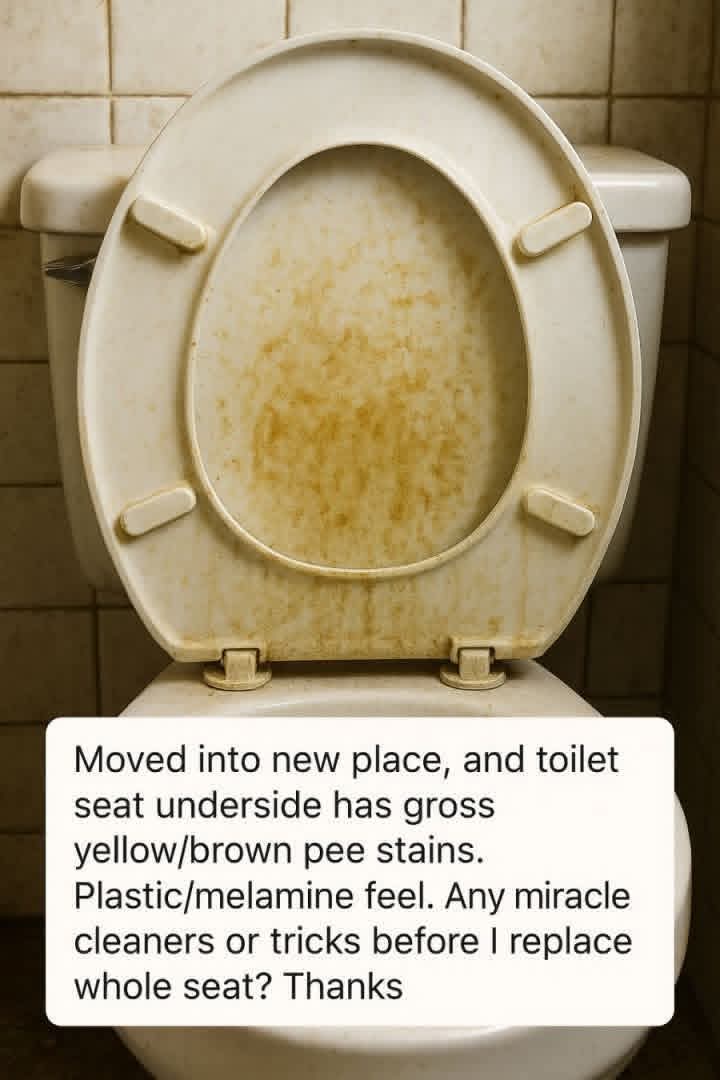
When the Underside of Your Toilet Seat Is… Questionable: Can It Be Saved?
Let’s be honest — few cleaning discoveries are as alarming as flipping up the toilet seat
and realizing the underside looks… less than sanitary. Stains, buildup, discoloration, and odors
can make you wonder whether it can be cleaned — or if it’s time to replace it entirely.
Can It Be Saved?
In most cases — yes. Many stains are caused by trapped moisture, mineral deposits, or bacteria.
With the right cleaning routine, a toilet seat can often be restored to a fresh, sanitary condition.
However, if the material is cracked, deeply stained, or porous, replacement may be the safer option.
Cleaning “Recipe” — Step-by-Step
Ingredients (Cleaning Supplies)
- Warm water
- Mild dish soap
- White vinegar
- Baking soda
- Soft sponge or microfiber cloth
- Old toothbrush (for crevices)
- Disposable gloves
Method
- Remove the toilet seat if possible — this allows deeper cleaning.
- Wash with warm water and dish soap to remove surface grime.
- Spray vinegar on stains and let sit for 5–10 minutes.
- For stubborn buildup, make a baking-soda paste and gently scrub.
- Rinse thoroughly and dry completely.
- Reattach the seat and disinfect the hinges.
When You Should Replace the Seat
- Deep cracks or scratches
- Permanent yellow staining
- Persistent odor even after cleaning
- Warped or loose hinges
If hygiene is questionable or the material is damaged, replacing the seat is inexpensive and often the best option.
Prevention Tips
- Clean weekly — especially the underside and hinges
- Keep bathroom well-ventilated
- Wipe moisture after cleaning or use
- Use gentle cleaners to avoid surface damage
Bottom line: Many toilet seats can be restored — but if in doubt, replace it for peace of mind.